Can Trump give Crimea to Russia?Yes, and hardly anyone can stop him.
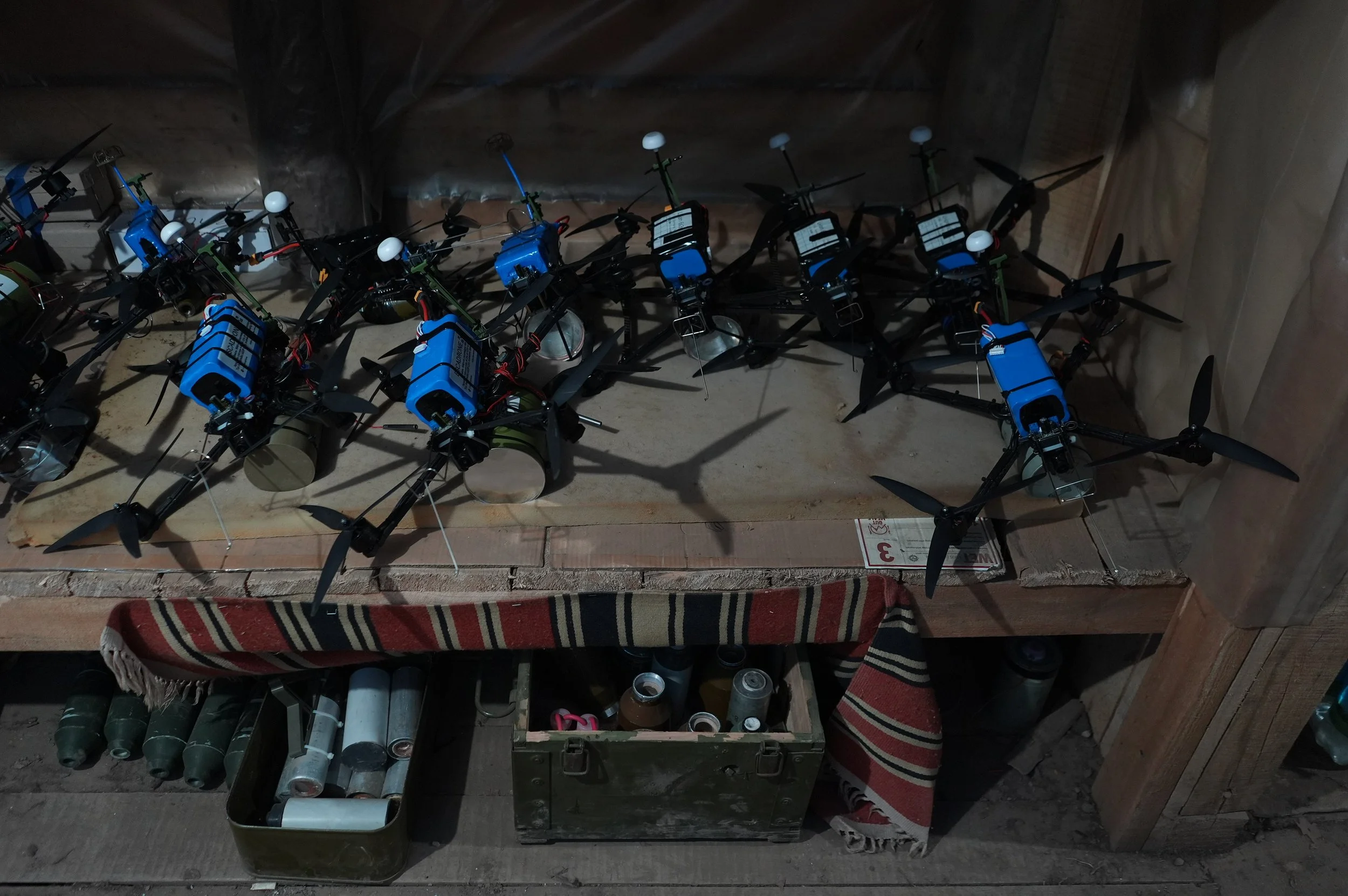
93rd Mechanized Brigade ‘Kholodnyi Yar’ – Frontline Hunter-Killer Drone Unit, The Donbas, Ukraine, March 2025. Photo by David Szyszko
WASHINGTON — President Trump's recent statement that Crimea will remain with Russia is quite a significant shift in American foreign policy, not only regarding the War in Ukraine but in its century-old doctrine of non-recognition of annexations using armed forces. The various global political implications of the president's international policy have been abundantly discussed since he took office in January. But is this decision his own to make? Can we expect any significant pushback against this decision inside or outside the country?
This week, the Latvian Russian-speaking media Meduza asked me to comment on the potential implications of Pres. Trump's potential decision to recognize Crimea as "de jure" Russian territory. Would such a decision be legal? Can Congress oppose the president?
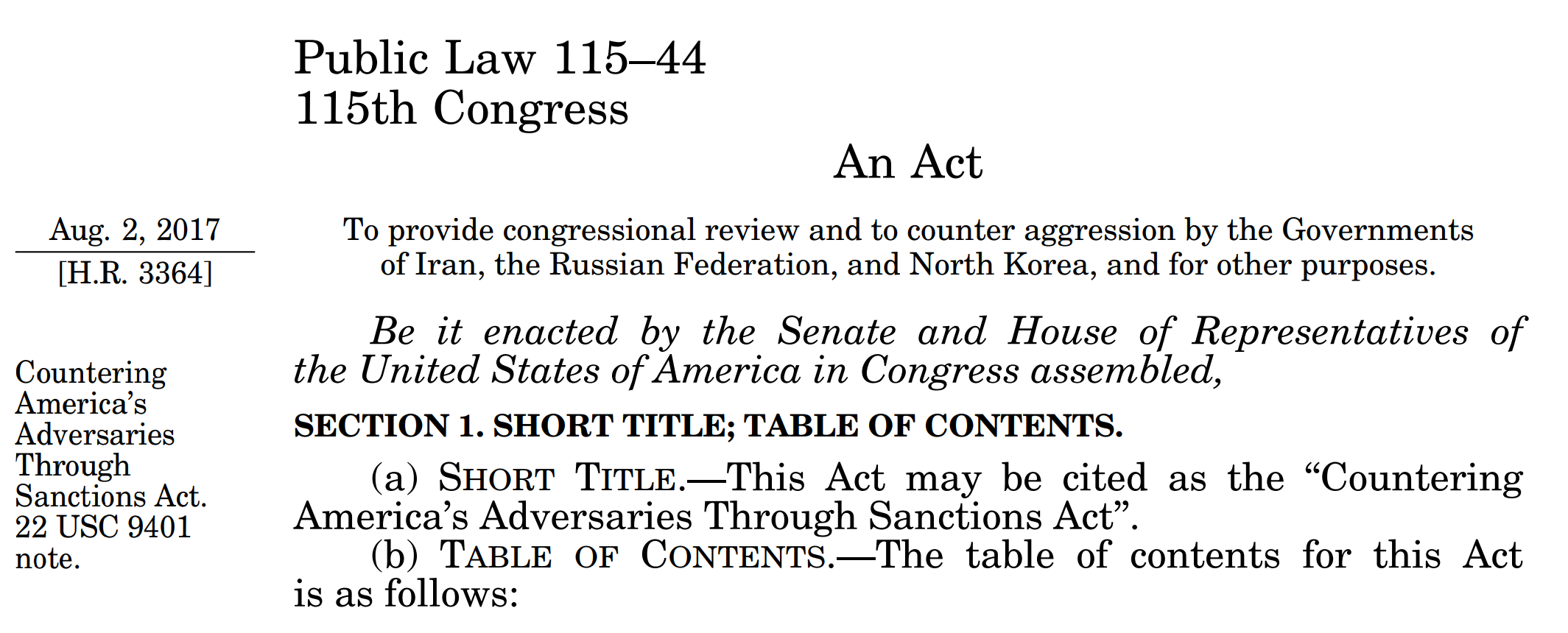
1) In 2017, U.S. Congress passed CAATSA, which prohibits recognizing Russian annexation of Ukrainian territories. Could this law prevent Trump from making major concessions to broker a ceasefire? And what happens if Congress opposes it?
Countering America's Adversaries Through Sanctions Act (CAATSA) is the framework sanctions bill against Russia, Iran, and North Korea passed by U.S. Congress and signed by Pres. Trump in August 2017.
CAATSA's Sec. 253:
"The United States, consistent with the principle of ex injuria jus non oritur, supports the policy known as the ''Stimson Doctrine'' and thus does not recognize territorial changes effected by force, including the illegal invasions and occupations of Abkhazia, South Ossetia, Crimea, Eastern Ukraine, and Transnistria."
The executive branch, represented by the president, has the exclusive power to recognize states and their borders. This follows from the interpretation of Article II of the U.S. Constitution in Zivotofsky v. Kerry, which the Supreme Court considered in 2015. The Court ruled that Congress cannot limit the president's power with legislative actions. The U.S. Congress, however, can utilize other tools that may inherently counteract this decision, particularly sanctions, such as those in the CAATSA law.
Zivotofsky v. Kerry:
"In practice, then, the President's recognition determination is just one part of a political process that may require Congress to make laws. The President's exclusive recognition power encompasses the authority to acknowledge, in a formal sense, the legitimacy of other states and governments, including their territorial bounds. Albeit limited, the exclusive recognition power is essential to the conduct of Presidential duties. The formal act of recognition is an executive power that Congress may not qualify. If the President is to be effective in negotiations over a formal recognition determination, it must be evident to his counterparts abroad that he speaks for the Nation on that precise question. A clear rule that the formal power to recognize a foreign government subsists in the President therefore serves a necessary purpose in diplomatic relations."
The section of the CAATSA law not recognizing Crimea and Eastern Ukraine as Russian Federation territory is based on the determination that these parts of Ukraine were annexed militarily. This part of the law uses the so-called Stimson Doctrine and the principle of international law ex injuria jus non oritur, which prohibit the U.S. government from recognizing territorial changes between states that resulted from military aggression. This is a well-established principle of American foreign policy.
However, the U.S. administration can change its policy and foreign policy doctrine for recognizing or not recognizing territorial changes, and, as follows from Zivotofsky v. Kerry, there is nothing Congress can do about it.
At least in his rhetoric, Pres. Trump ver. 2.0 shows that well-established understandings of policy and interpretations of the law don't matter much to him if the principles (or even more so interpretations) of the law prevent him from taking the political action he sees fit to take. He (and his advisors) are always willing to find an interpretation of the law that favors him and his administration.
To justify the legality of recognizing Crimea and four Ukrainian regions as Russian territory, Trump and his administration can simply claim that the right to recognize borders is the exclusive prerogative of the executive branch and close the issue. The administration could also formally recognize the 2014 and 2022 referendums as fully legal. Thus, according to the administration, the Stimson Doctrine ceases to apply, as does the CAATSA law's provision that Crimea (and Eastern Ukraine) cannot be recognized as part of the Russian Federation.
2. What about international law? Will it allow Trump to recognize Crimea as Russian territory?
Trump is willing to turn domestic law and century-old doctrines upside down; he pays even less attention to international law. Technically, recognizing or not recognizing territorial changes is the sovereign right of any state and its government. We can assume in theory that the U.S. administration's recognition of Crimea as Russian territory violates the principle of territorial integrity — but who can do anything to Trump in such a case? The U.S. does not recognize the unconditional jurisdiction of the UN International Court of Justice; the only country that can bring such a suit is Ukraine, and there is not much basis for such a suit. Recognition or non-recognition of territory is mostly a political act, not a legal one, and such a move will be dealt with in the political space, not the legal one.
3. Can Trump be thwarted by Congress and the Supreme Court, despite the Republican majority? How long might it take for the Supreme Court to hear the case? And what happens if the court finds Trump's decision illegal?
I don't think the Supreme Court or Congress would want to interfere with the process.
In theory, the Supreme Court could review its own 10-year-old decision and limit the president's right to recognize territorial changes. That's unlikely, but not impossible.
Of the five justices who voted in favor of Zivotofsky v. Kerry, only two remain (these are Sotomayor and Kagan); three of the justices who voted against the decision in 2015 continue to be Supreme Court justices now (Roberts, Thomas, and Alito). Of the new four justices who have taken their positions in the last 10 years (Gorsuch, Kavanaugh, Barrett, Jackson), it takes two votes to change the decision. In theory, Neil Gorsuch and Amy Barrett could vote to reconsider the decision, but that's more of a speculation based on their previous decisions. Both Gorsuch and Barrett were nominated by Trump in his first term. That doesn't mean they always vote for what Trump wants (especially Barrett), but rather that they are more likely to share Trump's positions.
The other question is: who is going to sue the administration; who has the legal standing to bring this lawsuit? A member of Congress can do so if the president's action violated an express prohibition that is outlined in an act of Congress. But here we go back to the beginning: the exclusive right to recognize boundaries is within the executive branch, and the administration can say that it recognizes territorial changes from the 2014 and 2022 referendums that it considers legal.
Congress has a number of tools that can limit the legal recognition of boundary changes. Recognizing or not recognizing territorial changes is a political act that, in and of itself, does not yet mean anything. In theory, Congress can pass a resolution that condemns the administration's decision and order legislation to be enacted without regard to that administration's decision (this is what is known in congressional parlance as the Sense of the House and Sense of the Senate).
Congress can try to continue sanctions policy on anything related to Crimea and the occupied areas of Eastern Ukraine. But that requires an act of Congress to be signed by the president, or a two-thirds vote to override a presidential veto. That is a direct political confrontation between the Republican-controlled Congress and the leader who is a lot more popular in the party than any member of Congress. That is just not going to happen.
Another tool that Congress can use is its power of the purse. Congress can allocate funds, for example, to fight the annexation of territories. Or, for example, prohibit the State Department from using any funds to make the recognition decision a reality. Trump can fight such clauses politically using his authority over Republican lawmakers, who would want to support these provisions. But blocking this policy would require a veto on the entire omnibus budget bill, and that would be more difficult.
But all of the above mechanisms are the formal powers that Congress has. When it comes to the political situation, the likelihood of Congress thwarting the administration is pretty slim. The U.S. Congress is now under the shaky but still full control of the Republican Conference. President Trump wields enormous power in his party, more than any Republican in Congress. Each of them has an extremely slim opportunity to oppose Trump, and they are unlikely to waste nearly their only chance to oppose the president on a political decision to recognize the annexation of Crimea, especially considering current budget fights. I think that if such a decision is made, a few Republicans will make statements but are unlikely to take any radical direct action.
4. What sanctions can Trump lift without congressional approval? And how does this mechanism even work?
All sanctions that are imposed by the U.S. Congress can only be lifted after the administration requests the U.S. Congress and Congress consider the matter. The U.S. Congress has passed sanctions in a number of laws since 2014 (or even 2012 if we include the Magnitsky Act in this list). These include personal sanctions against people involved in the Russian defense, finance, and energy sectors, sectoral sanctions on the Russian energy sector, and a ban on oil and other resources entering the United States. Under CAATSA law, the administration cannot simply lift these sanctions by executive order.
However, the congressional sanctions laws are mostly framework laws, and all the details are decided by the executive branch, mostly by OFAC (Office of Foreign Assets Control) and BIS (Bureau of Industry and Security). Here we get into the political realm again. If Trump orders the executive branch to stop enforcing the sanctions and actually lifts the sanctions without a request to Congress, what kind of reaction will that cause? Would Republicans in Congress be able to order Trump to enforce sanctions laws? If the administration stops enforcing the sanctions, or sends a request to Congress to lift the sanctions, as it should by law, Congress should pass a resolution that would prohibit Trump from lifting the sanctions - but that's essentially passing a law in which they have to point out to Trump that he's wrong. I doubt the Republicans in Congress can stand up to Trump now, much less pass a law. So there is a possibility that Trump will simply stop enforcing the law and invoke his presidential prerogative to conduct foreign policy and the political situation.4. What sanctions can Trump lift without congressional approval? And how does this mechanism even work?
All sanctions that are imposed by the U.S. Congress can only be lifted after the administration requests the U.S. Congress and Congress consider the matter. The U.S. Congress has passed sanctions in a number of laws since 2014 (or even 2012 if we include the Magnitsky Act in this list). These include personal sanctions against people involved in the Russian defense, finance, and energy sectors, sectoral sanctions on the Russian energy sector, and a ban on oil and other resources entering the United States. Under CAATSA law, the administration cannot simply lift these sanctions by executive order.
However, the congressional sanctions laws are mostly framework laws, and all the details are decided by the executive branch, mostly by OFAC (Office of Foreign Assets Control) and BIS (Bureau of Industry and Security). Here we get into the political realm again. If Trump orders the executive branch to stop enforcing the sanctions and actually lifts the sanctions without a request to Congress, what kind of reaction will that cause? Would Republicans in Congress be able to order Trump to enforce sanctions laws? If the administration stops enforcing the sanctions, or sends a request to Congress to lift the sanctions, as it should by law, Congress should pass a resolution that would prohibit Trump from lifting the sanctions - but that's essentially passing a law in which they have to point out to Trump that he's wrong. I doubt the Republicans in Congress can stand up to Trump now, much less pass a law. So there is a possibility that Trump will simply stop enforcing the law and invoke his presidential prerogative to conduct foreign policy and the political situation.4. What sanctions can Trump lift without congressional approval? And how does this mechanism even work?
All sanctions that are imposed by the U.S. Congress can only be lifted after the administration requests the U.S. Congress and Congress consider the matter. The U.S. Congress has passed sanctions in a number of laws since 2014 (or even 2012 if we include the Magnitsky Act in this list). These include personal sanctions against people involved in the Russian defense, finance, and energy sectors, sectoral sanctions on the Russian energy sector, and a ban on oil and other resources entering the United States. Under CAATSA law, the administration cannot simply lift these sanctions by executive order.
However, the congressional sanctions laws are mostly framework laws, and all the details are decided by the executive branch, mostly by OFAC (Office of Foreign Assets Control) and BIS (Bureau of Industry and Security). Here we get into the political realm again. If Trump orders the executive branch to stop enforcing the sanctions and actually lifts the sanctions without a request to Congress, what kind of reaction will that cause? Would Republicans in Congress be able to order Trump to enforce sanctions laws? If the administration stops enforcing the sanctions, or sends a request to Congress to lift the sanctions, as it should by law, Congress should pass a resolution that would prohibit Trump from lifting the sanctions - but that's essentially passing a law in which they have to point out to Trump that he's wrong. I doubt the Republicans in Congress can stand up to Trump now, much less pass a law. So there is a possibility that Trump will simply stop enforcing the law and invoke his presidential prerogative to conduct foreign policy and the political situation.