RBG’s Criminal Justice Legacy has Dems Fearing Trump’s SCOTUS Pick
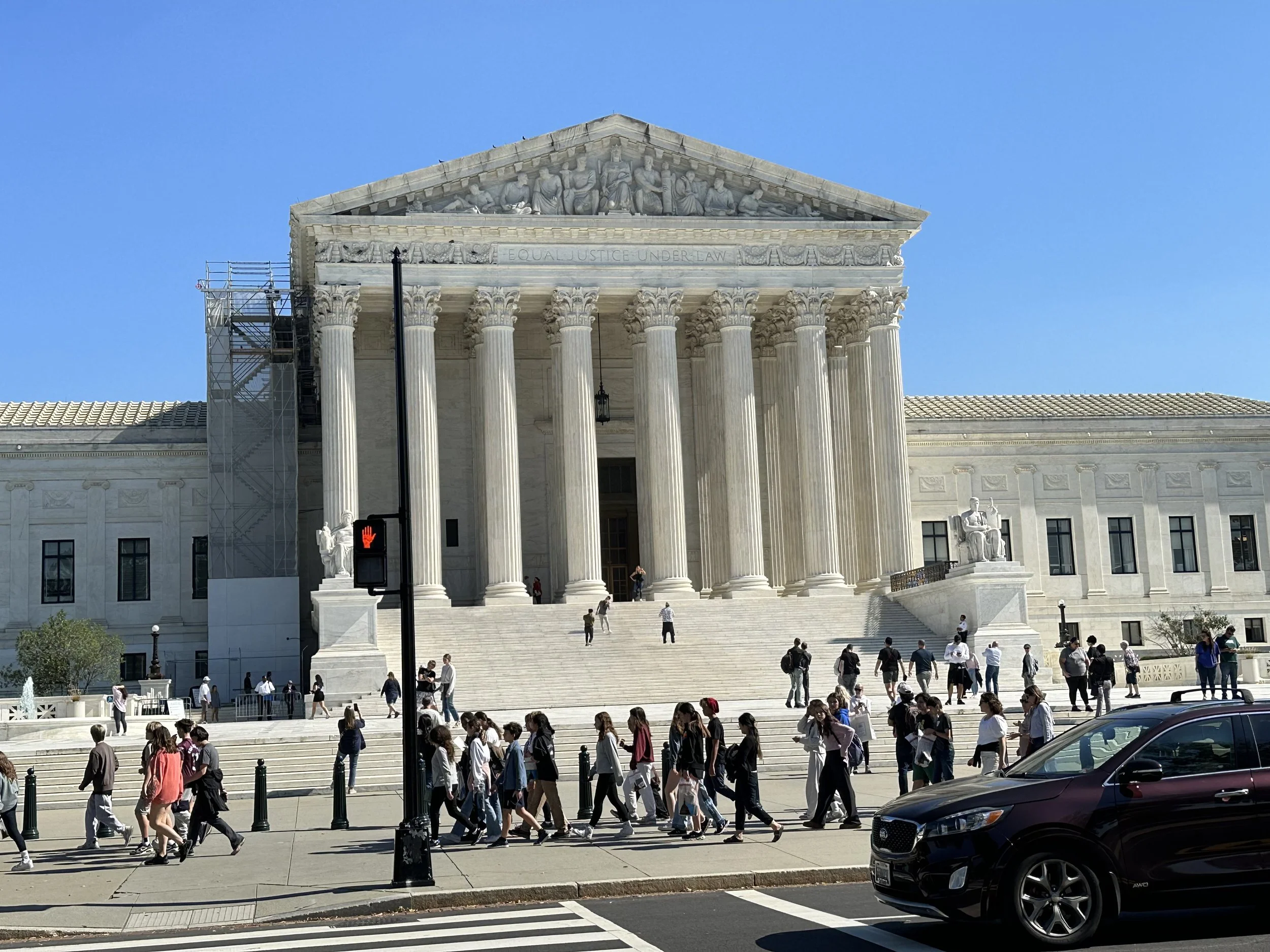
The death of Supreme Court Justice Ruth Bader Ginsburg has upended Washington just weeks ahead of the 2020 election. President Donald Trump and Senate Republicans – led by Majority Leader Mitch McConnell – are rushing to replace her, even as her dying wish was to have the winner of the election pick her replacement. And Democrats are scrambling to try and delay replacing her.
While Democrats have few tools at their disposal, they know her seat on the Court is vital to solidifying their party’s agenda in the nation’s book of statutes – from everything from criminal justice and drug warrants to voting rights and health care access for poor people. Bader Ginsburg – or “the Notorious R.B.G,” as she became popularly known as – was seen as a key vote on all matters of racial justice.
“Of course, I mean it’s an area of law that’s likely to change and expand for a long time,” Senate Minority Whip Dick Durbin (D-Ill.) told me as he entered an elevator at the Capitol with his security detail.
This summer’s unrest over the killing of unarmed African Americans across the nation has already witnessed numerous cases rapidly move from the court of public opinion into the nation’s actual courtrooms. Democrats fear that without RBG on the Supreme Court – and with a Trumpian conservative likely to be tapped to replace her – the wall of protections for people of color will quickly be eroded by a more conservative-leaning High Court.
“This nominee will affect the racial justice movement that is so well and wonderfully expressed by the peaceful protests that we’ve seen in Connecticut and all around the country,” Sen. Richard Blumenthal (D-Conn.) told me at the Capitol.
Blumenthal is a former state attorney general. He says one of the most important cases that deals with racial disparities in America is the GOP and Trump White House’s continued effort to repeal the Affordable Care Act, a.k.a. Obamacare.
“Part of the Black Lives Matter movement – and I support it – is a demand for healthcare justice. A nominee who will destroy the Affordable Care Act will only exacerbate the existing deep inequities that have caused communities of color to have twice as many deaths from the pandemic as others,” Blumenthal said. “So I think there are some racial equity issues that will be raised on policing, on housing, on education and on health care.”
It’s broader than just that issue though, especially to one of just three African American senators currently serving in the upper chamber.
I’ve seen how this Court has been slowly eroding the gains that were made by civil rights champions in the 1960s…
Sen. Cory Booker
“I’ve seen how this Court has been slowly eroding the gains that were made by civil rights champions in the 1960s,” Sen. Cory Booker (D-NJ) told me on his way to a vote at the Capitol. “And so I have a lot of concerns about civil rights, voting rights, the rights of individuals against power – corporations or government – and so I’m very concerned.”
Booker says the Roberts Court – called that because it’s led by Chief Justice John Roberts – has already been actively unwinding important protections for black, Latino and impoverished Americans.
“We’ve seen how this court – the conservative members of this court – have elevated the powers of corporations: Citizens United elevated the powers of states against people’s rights to organize, so there [are] a lot of things that really have me worried right now,” Booker said. “But we’re still in a fight, and we can still stop this – it’s not a fait accompli yet.”
Republicans brush aside those charges.
“I don’t know how they can say that – they haven’t had a nominee yet,” Sen. Marco Rubio (R-Fla.) told me as he waited for a tram underneath the US Capitol. “But that’s what they’re going to say about anybody that a Republican nominates at this point.”
Even as he supported both of Trump’s last two conservative Supreme Court nominees who have been accused of supporting just those policies, Rubio says he doesn’t want an anti-criminal or racial justice nominee.
“That’s not my criteria for who our nominee is. My criteria is that it’s somebody that is going to interpret the law according to the intent of the legislative branch and the Constitution according to its framers,” Rubio said. “And if we want to change the law on any topic, that’s what lawmakers are supposed to do, so that’s what I anticipate they’re going to nominate.”
Democrats aren’t buying that line from rank-and-file Republicans.
“Do you think that Republicans care?” Sen. Mazie Hirono (D-Hawaii) told me after casting a vote on the Senate floor. “No.”
“The Roberts Court is already heading toward corporate interests over individual rights and freedoms to begin with, and that’s been going on for a while. And now it’s going to be accelerated,” Hirono said. “There are more cases now that will end up in the Supreme Court probably having to do with voting rights and possibly census questions – all kinds of issues, LGBTQ rights – all of these are probably heading to the courts.”
With Trump likely to nominate another far-right conservative to replace Ruth Bader Ginsburg, Hirono thinks the entire GOP apparatus – from conservative state legislatures to GOP-controlled governor’s mansions – is preparing an all-out assault on any laws passed under former President Obama or potentially under a President Joe Biden.
“With a very conservative court, they’ll be motivated to bring many more of these kinds of lawsuits, so there’s a huge danger to our individual rights and protections,” Hirono said.
She added that the GOP and Trump’s White House are already prepared to repeal the Affordable Care Act in arguments before the Supreme Court.
This November – a mere week after the elections – the Supreme Court is already slated to hear arguments in yet another ACA or Obamacare case. And Hirono and other members of the Senate Judiciary Committee only expect to see more challenges if Trump gets another conservative nominee on the court.
“That’s what’s happening,” Hirono said through her Democratic mask which was half donkeys and half the word ‘VOTE.’” “That is why I’m out there telling everybody that they have a choice in this election, to continue to support this president – who wants to screw us all over – or to have Joe Biden/Kamala Harris who want to bring people together.”
Republished via the Wayback Machine.